
Note: This post was written in 2019. My recollection of events may, understandably, not be 100% accurate, given what my body and brain were going through.
May and June are bittersweet months for me. They represent some huge milestones in my life: graduating with my PhD and the birth of our daughter, Shiloh. However, the latter event has some pretty devastating memories sewn up with it, so the warmer air, Mother’s day, and Shiloh’s birthday always get me thinking about my experience with postpartum psychosis, and how it rocked our family.
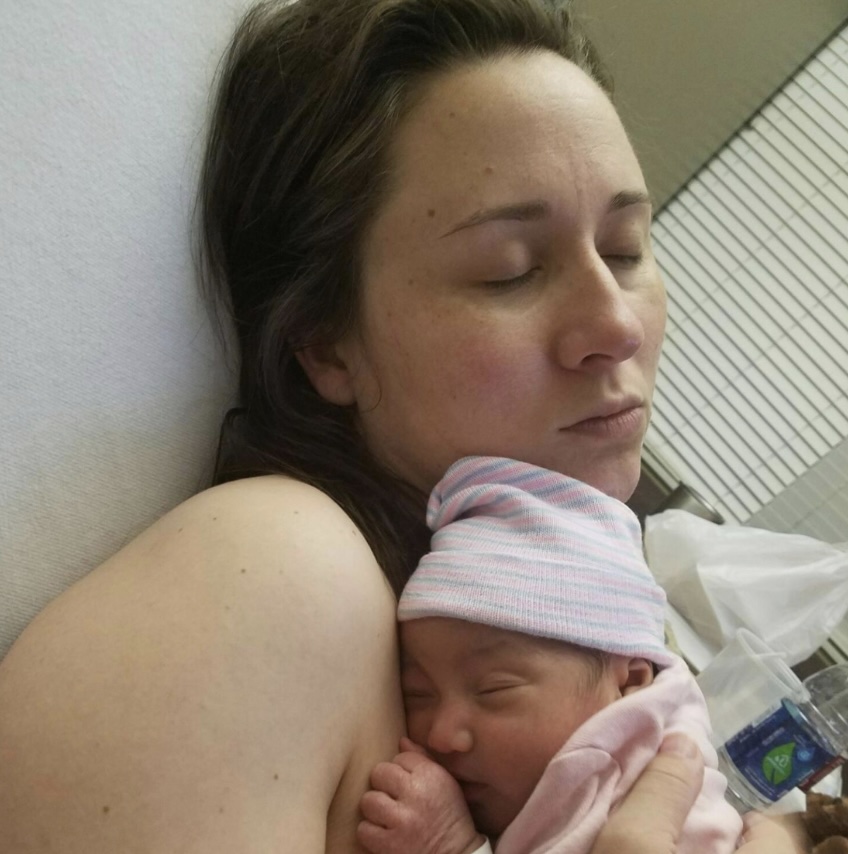
This photo was taken on the morning after Shiloh was born. By that time, I had probably already been sleepless for about 72 hours but no one was yet aware. I stayed pretty quiet in the middle of the night while my husband Eddie slept, unknowingly swimming in the hormones that surge when a baby is about to be born. At the hospital, nurses were coming in every few hours to prompt me to breastfeed, so it was no real surprise when I was awake on their rounds. We didn’t know then that insomnia would be a defining feature of my disorder and would continue to haunt me well into the coming weeks.
Postpartum Psychosis (or PPP) occurs in only 1 to 2 out of 1,000 births (or 0.01%-0.02%). Before you think I’m anything special, let me let you in on a little secret: women with bipolar disorder are at a risk of 25%-50% of having PPP. I was working closely with a psychiatric professional before Shiloh’s birth, who was acutely aware of my diagnosis, and while I fretted about postpartum depression, and she tried to assuage my fears, she did not let me know that the more likely beast to show up at my door would be PPP, and what an emergency plan should look like.
The day after we brought Shiloh home from the hospital, we had a pediatrician appointment. I remember the doctor saying that we should have everyone who planned to touch her wash their hands, and in the truck after the appointment, I burst into tears, telling Eddie about the neighbor who I let hold her without a thorough scrubbing. He was surprised, and a little frustrated, that a perfectly successful first doctor’s appointment was causing me to sob, and I think he cautiously asked if this was postpartum depression. After a few minutes I brightened a little bit, and we went on our day. Over the next 24 hours, we watched movies and I nursed Shiloh, while various friends popped over to wish her welcome to the world.
Shiloh was born on a Sunday. By Wednesday night we knew something was wrong and the cat was out of the bag that I hadn’t been sleeping. I called the on-call OB-GYN and shakily admitted that I thought I was having an episode of postpartum psychosis. Eddie quickly grabbed the phone and started talking to the doctor, assuring her that he was present, that the baby was safe, and that it was likely an issue of lack of sleep. Ambien was prescribed and I finally got a good night of sleep.
On Friday night, we put Shiloh to sleep and climbed into bed. When Eddie’s breathing was deep and regular, I picked Shiloh up and took her into the bright living room. I sang to her her special song (Neil Diamond’s, “Shilo”) and settled in to nurse. I had found that my emotional connection to her seemed to wax and wane, but that when I was nursing, I felt a surge of love and deep contentment.
I continued to sing her song, stuck on a two-part verse and repeating it over and over. At this point, Eddie was still deep in sleep, and I sat in a recliner, baby to breast, lost in the song. My skin began to buzz, in what I learned later is called a tactile hallucination. I wasn’t scared at all. This seemed perfectly natural, and part of whatever magical ritual was happening as I fed her. Soon, I began a mixed hallucination/delusion in which Shiloh was feeding and drawing off of me my life force. She was growing at an enormous pace, such that it was incredible, a miracle! Journalists were coming to take photos of the tiny little human that was developing so rapidly, while my body shriveled at the effort. Eventually, the delusion shifted into what I can only describe as a feeling of an out-of-body experience.
I opened my eyes and saw my untidy living room, the art on the walls, and the recliner. I was in my house. However, my brain was convinced that my body was miles away in a hospital and that my consciousness was trapped inside our home. I was in a coma, and I was dying. I screamed for Eddie, shaking him from his fragmented sleep. He came hurtling into the living room and I thrust Shiloh into his arms before jumping up and down and shrieking, “I’m not going to die!”, “I’m not going to die!”. Sometimes, when Eddie wakes up suddenly, 3 years later, he still feels shaken by that scream, and has to immediately check on Shiloh and me, to make sure we’re safe.
After getting Shiloh settled down after my terrifying behavior, Eddie and I lay down in our bed. He had his computer out and was researching psychiatric units. I was on my back, still lost in psychosis. I imagined that my body was filling slowly with cold water, being revived from the coma by an IV drip in a hospital bed. Periodically, Eddie would ask me if I knew where I was. “Yes, I’m in a hospital”, I would reply.
As Eddie searched for the best place to send his wife for treatment, I started to believe a new delusion: that I had somehow given Shiloh 3 Ambien pills and killed her. I found out later that I had taken 3 Ambien, thinking them milder Melatonin and trying to reach a therapeutic dose. This would become important during my first, briefer hospital stay, when the doctor misdiagnosed me as unintentionally overdosing on the sleep aide and having related psychotic symptoms.
The next morning, Shiloh’s grandmother took over baby duties, while Eddie and my father-in-law drove me to the psych unit in town. I shrieked over and over that I had killed Shiloh, and they shakily tried to convince me that Shiloh was safe with Grandma.
In the tiny office of the consult room, a telehealth doctor tried to diagnose me via iPad, and I think I remember him saying, “This is very normal”, but that was probably a delusion. I hung on those words, trying to stay grounded in reality for at least a moment.
After the goodbyes, I was taken into a two-person room without a roommate. I learned later that this was because I was screaming, and scaring the other patients. Either because they gave me a sedative, or because my body simply gave me a brief reprieve, I lay down on the bed and felt deep relief; deep no-feeling. I suddenly became convinced that the hospital was heaven, and that this feeling of calm was indicative of death. Again, cue the screaming. The hospital director, Lisa, came to talk to me, and informed me that I was scaring everyone else. From what I remember, that was a pretty common theme of my stay there.
As I said above, I was initially misdiagnosed as overdosing on Ambien. This is most likely because I became remarkably lucid about 48 hours after my admittance. I was released home, and in a period of time I don’t remember, my family decided I needed to be back in the hospital. Over the course of a total of 29 days, I remained in the psych unit.
My doctors, to be honest, made decisions medically that were not in my best interest and that, in hindsight, and with some research, prolonged and intensified the psychosis. Eddie spent hours researching drugs, and then hours on the phone with whomever would speak with him, trying to convince medical personnel to try different things with me that might actually work.
I, meanwhile, was in a living hell. For whatever reason, my brain was revolting in a way that conjured the worst of what I could imagine, and thrust me right in the center of it.
My delusions were horrifying and very, very real. I remember being informed that my whole family had been killed in a horrific car wreck. I saw a bundle of dirty towels on the ground and knew that it was my own dead body, and that I would have to live in a half-world hell with the dead forever. I interrupted other patients’ phone calls to scream that my dad had lost his hearing and that I could never talk to him again. I was shot multiple times in a school shooting. After that, I was the shooter, and I was riddled with guilt. Shiloh was dead, and it was my fault. All of these delusions were violently realistic and gripped me so hard that only sedating anti-anxiety medications could bring me down from them.
Eddie, my champion of a husband, brought Shiloh to visit every single day that he could. I got to spend one hour with my baby per day across the first 5 or so weeks of her life. I didn’t really want to touch her, for fear that I would hurt her, and often, I was not really lucid enough to hold her. I remember gripping Eddie’s face during one meeting and telling him he was melting or shrinking, while he calmly denied it and tried to force me back to reality with his firm voice.
When the hospital finally felt like I was safe to be released home, I was required to enroll in a partial hospitalization program (PHP) where I attended process groups all day. I was in my element there, and enjoyed the courses, but was not yet connecting with Shiloh, and would come home from the hospital only to be terrified of being her mother. My stay in the psych unit and the PHP ate up my maternity leave, so two weeks after graduating from PHP, I went back to work. I was functioning on the part-time professional schedule, but I still saw the tiny infant in our home as a stranger.
For the next 9 months, I struggled with being a mother. Eddie could calm her better when she cried. That made me ashamed. I was the mother, and it was supposed to be me she wanted to be with. Sometimes Eddie had to work, and I had to watch her by myself for a few hours. I felt lost with the time and didn’t know how to fill it. I drove her to Walmart and walked around with her in her carrier because it was easier than trying to actually mother her. I saw this beautiful little girl as something foreign that didn’t really fit in my sphere of existence. I think being ripped from her so early and for so long while she was so little put a rift between us that I was sure would never heal.
Thankfully, Eddie was always watching, always concerned. He began to talk about moving to Phoenix and finding a job there. Thinking about being back home, and by my parents, gave me such hope, that when his job offers didn’t pan out initially, I started looking for myself. We ripped ourselves out of our life at great cost to our finances and to Eddie’s tenure at his dream job, and we made it back to Arizona.
These past 3 years have been difficult, and not only for motherhood’s challenges. However, I am blessed to know now that my daughter loves me deeply, and that I, finally, feel that we are connected, as a mother and child should be. If not for the quick thinking of Eddie, the marvels of modern medicine, and the support of our families, I might still be swimming in the pools of psychosis or struggling to forge a bond with my child.
As May wraps up, so does Maternal Mental Health Month. Thanks to celebrities being open, and everyday mothers sharing their stories, the world is getting more accustomed to the concept that the postpartum period can be exceptionally difficult for some women.
PPP is one shade on the spectrum of perinatal mood disorders, and in my experience, it is a dark and putrid one. If you have bipolar disorder (type 1 or 2), or even if your family has a history of bipolar disorder, I encourage you to do some research about postpartum psychosis before considering getting pregnant. Have a safety plan and be open and honest with your partner, no matter how distressing your thoughts are. Hospitalization is almost always necessary for this crippling disorder, and it’s better to identify your closest and/or ideal unit as part of your birth plan.
PPP was a life-changing and traumatic episode for me. It has made Eddie and I reconsider having more children biologically, for fear that I might never return from the darkness that could potentially overwhelm me again. At the same time, it has opened up so many opportunities for me to talk about maternal mental health with other women and share on a deep level about how difficult new motherhood can be.
I choose to feel blessed by being shattered and repaired than feeling despair for ever being damaged in the first place.
If you or someone you know is concerned about symptoms of PPP or if you can relate to what I wrote above, please speak to a doctor.
In the mean time, visit Postpartum Support International http://www.postpartum. for resources, a directory of providers, and peer support mentors.
#MentalHealth
#PostpartumMentalHealth
#PostpartumPsychosis
#PerintalMentalHealth
#PMADS
#Motherhood
#Maternity
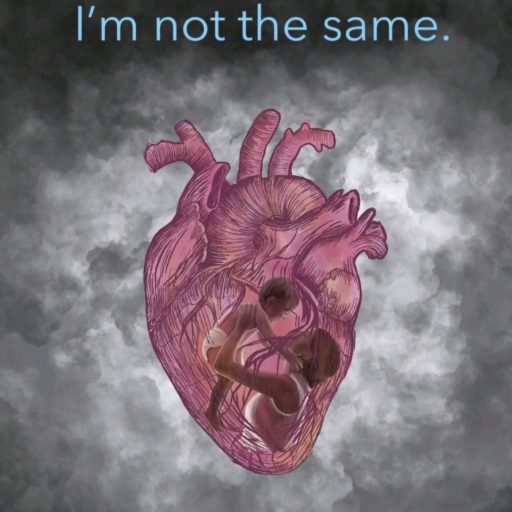
 I'm Not The Same
Leave a comment