

It may “take a village to raise a child”, but, for many mothers, the burden falls squarely on them. Although the dynamic of mothers’ roles outside the home has changed, in some families, mothers are still expected, whether explicitly or implicitly, to carry the responsibility of primary caregiving, and the entire mental load of the household (Note: this post is primarily speaking to the dynamic of heterosexual couples, as this is where more research has been conducted. Similar dynamics may also exist among queer couples).
Mental Load can be described as the non-tangible, unspoken tasks that keep the household running.
The following excerpt comes from the BBC (link following post):
“Experts say that this hidden work comes in three overlapping categories. There’s cognitive labour – which is thinking about all the practical elements of household responsibilities, including organising playdates, shopping and planning activities. Then there’s emotional labour, which is maintaining the family’s emotions; calming things down if the kids are acting up or worrying about how they are managing at school. Third, the mental load is the intersection of the two: preparing, organising and anticipating everything, emotional and practical, that needs to get done to make life flow”.
I sent a set of 13 questions to mothers who indicated that carrying the mental load may be a salient issue for them.
My hope is that, if you identify with their responses, that you will recognize that you are not alone.
All respondents ended their survey with a question about what they would say to another mother in a similar imbalanced dynamic. Some take-aways from their advice are:
- Make time for yourself
- Seek professional counseling.
- Communicate clearly what you expect from your partner.
- If your partner says they will do it, hold them to it.
How long have you and your partner been together and old is/are your child/children?
Rose: I have been married to my partner for 10 years. We have two children, ages 7 and 9.
B+WorkingMom: 1 child, together 7 years
TaraH: My husband and I have been married 17 years. We have twin boys in their very early teens.
Chelsea: Two under two. I’ve been with my husband for over three years.
Emma: We’ve been together for 8 years total, 6 years married and had our son 3 years ago.
KB: 4 years together, 10, 7, and 2
Jennifer: I known my partner for 7 years. We have one child.
Lily: We have been together since 2004, but only married for 13 years. We have 2 kids under 10.
Describe your relationship with your partner before you had children? Does that look different now?
Rose: We had a rocky relationship before we got married – off and on again. We had trouble communicating. But when we got married, we spent the 3 months before I got pregnant in bliss. Always together. The honeymoon phase was real for us. Then I got pregnant, he was so attentive, but when the kiddo got here, our relationship drifted. Now that our 2nd kiddo is 7 years old, we have gotten much better at communicating, but we still don’t spend enough time together.
B+WorkingMom: There were definitely some ups and downs, but for the most part we felt connected and on the same page. We rarely argued, or even disagreed about the important things. It felt like we were on the same team. He never really had a ton of drive professionally but he was working and keeping himself busy. We set activity goals as a couple and did them together. Now I constantly feel like there is a barrier between us, like I have to ask a question multiple times before he hears me or bothers to respond. He has his own goals, which he sets without me and without regard for our child’s schedule, and as a result I feel like we don’t have the time for any goals for me. We have had some major disagreements over child rearing/child care but we still never fight, it just never gets resolved. It’s like he’s decided that we agree to disagree and then just does what he thinks is best (although technically I guess you could say the same for me, I just have history and science backing up my actions). As an example, if he thinks a daily activity isn’t important (like brushing hair in the morning), he just doesn’t do it and leaves it for me to do, whether I’m home at that time or not. Even if a medical professional or current research says something like limit screen time, he doesn’t believe it and will put on tv for the toddler or watch whatever he feels like watching (which is honestly usually inappropriate) while the toddler is in the room.
TaraH: The relationship worked before we had kids. We didn’t know we were both neurodivergent but I think it’s what bonded us. I am ADHD and he is autistic. After kids we no longer have a typical marital relationship. There is no romantic component; just partners in parenting and financial concerns. We posture as normal but we are no longer functioning well. We find times of acceptance of the situation but we can be quick to anger with each other.
Chelsea: Our relationship was less pressured with a significant amount of time dedicated to us as a couple. Less financial stress.
Emma: It was absolutely more equitable. More evenly divided although my schedule being more flexible meant chores often fell on me. But fixing meals etc were more evenly split between the two of us than they are now when the entirety of the cooking really falls on my shoulders (in addition to the vast majority of the mental load associated with our three year old).
KB: When we started dating I had two children under 6. Having a child together added an additional layer of complexity, but ultimately made our family more united.
Jennifer: Our relationship was very passionate in the beginning, we were becoming very close emotionally and were very active in our social life (meeting with friends, going out). There were moments of my partner showing signs of depression or anxiety, but nothing out of concern. During my pregnancy, I noticed my partner was becoming more agitated, easily overwhelmed, and sometimes the thought of becoming a parent was causing him to feel that he was “unworthy of being a good dad.” He quit a well-paying job while I was pregnant, and he quit another job (after not working for over a year) due to his mental health. We are financially struggling now.
Lily: Before we had kids I really took care of most things. I paid the bills, did the grocery shopping, did the laundry, cleaned, etc. He is the cook, but we didn’t cook that often. He was there as emotional support but not as a partner in the mental load.
Which household duties did you and your partner mutually decide would be yours? Are there responsibilities beyond what you agreed upon that fall on you?
Rose: I pay the bills. I take care of signing up and scheduling sports activities, sign ups, field trips, basically all school activities. I schedule family activities. I do laundry (wash/dry – sorting is for the kids), and I mow the yard because my husband has terrible allergies. I also schedule appointments for the animals. Basically, if it’s something that needs to be paid or scheduled, I handle it. He cooks more than I do, but I have to delegate household chores. I wake the kids up every morning for school. I sign forms.
B+WorkingMom: We have never been able to talk about the full house responsibilities with any sort of result, but during pregnancy and after the child was born the husband said he would handle the garbage, the lawn, most of the cooking, car maintenance, and paying the bills; while I would handle the laundry, the grocery list, most of the grocery trips, and be the breadwinner. As things evolve the husband has succeeded in the car maintenance and the bills (which are all set to auto-pay) but little else. The garbage is emptied once a week unless I do it. No one handles the outdoor space. We both manage the bills that aren’t on autopay. He doesn’t believe that the house is ever that dirty, so he rarely does more than the dishes, putting me firmly in charge of the vacuuming, dusting, kitchen upkeep, bathrooms, etc. This isn’t much different from pre-child, but it didn’t bother me as much and I had the time to get it done. I find myself being in charge of almost the full mental load of tasks, including all child related scheduling, medical followups, grooming, and research (schools, daycare, sitters, etc). When maintenance around the house is needed I try to wait if he offers to handle it, but after a few weeks or months I do the legwork just to get it done.
TaraH: Almost everything falls on me because I am not the breadwinner. I wasn’t able to return to full time work after the boys were born because one has a rare genetic syndrome and both are autistic and ADHD. This has meant even as I have returned to part time work almost all the cleaning- educational needs- handling households tasks- medical planning- anything the boys need- are on my plate. There have been tense negotiations to help lessen my load and some strides have been made but nothing even close to equality.
Chelsea: We don’t have “agreed upon duties.” However if I want it done daily, I clean main areas such as kitchen and living room. I do one load of laundry a day and clean bathrooms once a week. I sweep primary areas multiple times a day and mop the entire house once a week.
Emma: Dropping off at school, all the scheduling for extracurriculars and who is picking up on any given day. All the medical/dentist/hair appointments are also my responsibility. Part of this is that my husband is the breadwinner financially and his job is less flexible time-wise. So on some level it “makes sense” for these things to fall on my shoulders.
KB: When we met, I worked as a teacher. This included long days at school, texting parents at night, grading and planning on the weekends, etc. I was also a single mom and entirely responsible for my home. Two years in , we decided I would stop working to focus on the home and new baby. I do nearly 100% of household and caregiver responsibilities, and it makes sense for us. Beyond the tangible things you see every day, I feel like I’m the keeper of the schedules, even for my husband.
Jennifer: Mutually we have taken responsibility of cooking dinner together and cleaning the kitchen together. All household responsibilities are supposed to be done by him since he is not working. I currently have to come home to clean, cook, clean another area of the house, get our daughter to bed. My partner will “forget” or will be “tired” from his anxiety/depression and says he cannot complete daily tasks. So all those responsibilities fall upon me.
Lily: I’m not sure if the were mutually decided upon in a conversation… or things I just did. Everything from the previous question but also for the kids and with a bigger house. With kids I also tend to do sign up for anything (events, school, doctors visits, etc). I tend to take them to events and I am definitely the default parent. This is also the case since I am off on the weekends and my husband has to work.
Please describe the feelings that come up when you evaluate the responsibilities that you are expected to accomplish:
Rose: Overwhelmed, definitely. Sometimes I forget to pay stuff or the schedules get mixed up. I stress when I forget things and I start to feel like a failure for missing a practice or not making it to a school activity.
B+WorkingMom: Overwhelmed – just carrying the mental to do list (even if written down) makes me want to curl up in a ball and cry. Resentful – I make more money, I keep the mental list, and my partner doesn’t carry nearly the task load to match. And doesn’t seem to care. Confused – I’ll complain about the husband but if anyone suggests divorce my gut reaction is HELL NO. Even if he never changes I feel like I’ll never want to be away from him… so at what point am I doing this to myself/enabling him?Validated – my friends, both sets of grandparents, and even mutual friends have spoken up about how clear it is that I’m carrying the weight of the family.
TaraH: Because I am late diagnosed ADHD I have only seen a sharp increase in the challenges associated with this mental profile. I was able to modify and handle my challenges much better before twins. I have some established accommodations I have developed but I find it very exhausting and ultimately not successful in achieving personal goals. I’m chronically overwhelmed and I often feel like I’m constantly catching up.
Emma: Some days I feel like a superhero— I can do all of these things plus raise an awesome kid feels like a badass move on my part. But some days I feel so overwhelmed and trapped because it often feels like I can’t do anything well, not my job, not parenting, not being a wife, not my own interests that it feels like it’d just be easier to give up.
KB: I feel highs and lows and everything in between. Sometimes I feel lucky to have this time with my baby. I feel proud, appreciative, and even indebted to my husband for shouldering the financial burden of our family. And there are lots of days I feel unappreciated, bored, insignificant, and unfulfilled. I miss making a contribution to my community.
Jennifer: I become agitated when my partner explains I need to do more, this makes me feel overwhelmed due to my already stressful work load I have at my job. I do complete my own responsibilities and more, this does help me feel better that our toddler is in a cleaner environment.
Lily: Overwhelmed if I think about everything that I do all at once. I often feel like I am constantly failing at something because all the “plates” can’t be held at one time. There is always something that doesn’t get done. I sometimes feel resentful because I take on more of the load/responsibility, but then frustrated that if I try and voice my desire for help my partner gets defensive. I want him to hear me and not think that I am accusing him of being a bad partner. I just want my partner to help without having to ask (which adds to the mental load).
What is the impact of carrying more responsibilities than your partner on your mental health?
Rose: I definitely get stressed more easily and am more likely to let my anxiety take over. I yell more as a result. I start to feel sensory overload when everyone in the house is talking or I’m planning a million things. I get angry if I’m asked too many questions at once. I have to stop and breathe frequently.
B+WorkingMom: I want to cry and scream all the time. I rarely feel happy if I’m not interacting with my child, and when I do there’s something in the back of my brain that says you’re forgetting something or to wait a few hours and it will all come rushing back. Self care time is a joke – I can perform self care at my child’s expense or my job’s expense. The rare times I’m able to take time for myself I have a hard time relaxing and enjoying it because I’m thinking of all the things I could/should be doing, or worry that my husband is just sitting my child in front of the tv instead of engaging at her like I would be doing.
TaraH: I’m in burnout. It’s a burnout that cannot be resolved because nothing stops it. I have support but it’s in bits and pieces and my mental health is deeply challenged. I do the therapy I can but I can’t afford any mental health beyond some free talk therapy offered by my child’s awesome complex medical needs clinic. Being financially strapped just makes everything harder.
Emma: Very negative. It’s been so challenging to feel like I’m the only one responsible for everything. And more than that that my husband can walk away from the challenges where as I can’t.
KB: I feel really grateful that I can relieve my husband of the load. Also, I know my brain is much more suited to multitasking, scaffolding, and the minutia of every day. He’s a big picture guy, and I’m glad we can play to each other’s strengths. I used to be overwhelmed, stressed, and exhausted when I did it all. But knowing it’s my only focus, puts things into perspective and makes it all much more manageable. Every now and then, I have to pep talk myself into another load of laundry or a 2 hour grocery store trip to maximize coupons because it isn’t glamorous or fun, but making the mental shift to taking care of my husband because he takes care of me (and my children from a previous relationship) makes a big difference in my mental state.
Jennifer: The impact of carrying more responsibilities has caused me to be more emotional and easily cry when I feel things are not going as planned. I cry on my way to work, I cry on my way home. Especially when my partner sends me text messages explaining why he could not complete his duties for the day (my ADHD, I could not sleep the night before because of night terrors). Also, the stress have mentally is is tense because I am working so hard to get a needed promotion and I feel like a failure that I cannot get it.
Lily: I certainly have anxiety as a result of all the thinking and responsibilities on my shoulders. I get caught in the cycles of shame and guilt with what I feel I “should be doing.” So it comes across as me being angry or upset, when really I just feel overwhelmed. I also just get tired.
What is the impact of carrying more responsibilities than your partner on your relationship of them, from your perspective?
Rose: There are times when I feel upset that I have to ask my partner to do things. And sometimes I assume that he knows that I want him to take care of the chore NOW. We are able to talk about it, but the feelings still come up.
B+WorkingMom: I’m shorter with them than I used to be – partly because I’m tired, but mostly because I’m tired of them needing me to tell them to meet me halfway on household tasks to realize they need to do something (and STILL not doing it.) I’ve stopped defending their laziness to family and friends, and just agree that it’s there and move on in conversations. I’ve also gotten really upset before when my husband isn’t helping as I’m cleaning and doing everything and when I bring it up they say that they were helping by watching the child (who was in front of the tv, not interacting with them.) And then I get resentful because when do I get to sit with my child while my husband does the chores. I will say that in some areas I’ve realized that it really isn’t that important when things are busy to, say, clean once a week instead of every 2 or 3 weeks.
TaraH: I’m bitter. I try to work on myself so I don’t act on my resentment but it’s very difficult. Trying to manage the intricacies of 3 autistics is extremely challenging. I know parenting challenges my partner because of his own neurodivergent challenges but because he won’t see a marriage therapist it cannot be helped. He is medicated but no personal therapy is budget friendly.
Emma: Negative. I think that I’ve been more bitter and resentful than I’d like towards my husband which is a shame since I really think he’s wonderful overall. But being the primary parent is just so damn difficult. More recently I’ve been more vocal about what I need and organizing activities/events so that the load is shared and it has changed our relationship drastically for the better (so the mental load still falls on me but at least the physical load doesn’t!).
KB: Again, I think it changes every day. I know he feels immense pressure to provide financially, but I know he wouldn’t change things any time soon because of the time we are afforded together. We get real quality time on weekends and evenings because Ive run all the errands. Ive done the chores. It’s a sacrifice we’ve both made, in different ways, but it gets us closer towards our goal of a strong marriage and a happy life together.
Jennifer: I feel angry, that having a child and a partner who is chronically ill, is not enough motivation to do the basic house cleaning. Having a very good paying job meant we would be able to soon move out of this house we are in now, but we cannot afford without another source of income. My partner has also been involuntarily sent to a mental health facility by me, twice. He has also tried to commit suicide by swallowing pills. I feel broken, and I have not taken care of myself. I am overweight, eating unhealthy, and I am afraid the stress is going to cause me to have another stroke.
Lily: I am trying my hardest to communicate more so that resentment doesn’t build. It certainly doesn’t help the relationship. I don’t feel as “fun” because I am the one thinking about things. I am also not as interested in being intimate as often because I am tired.
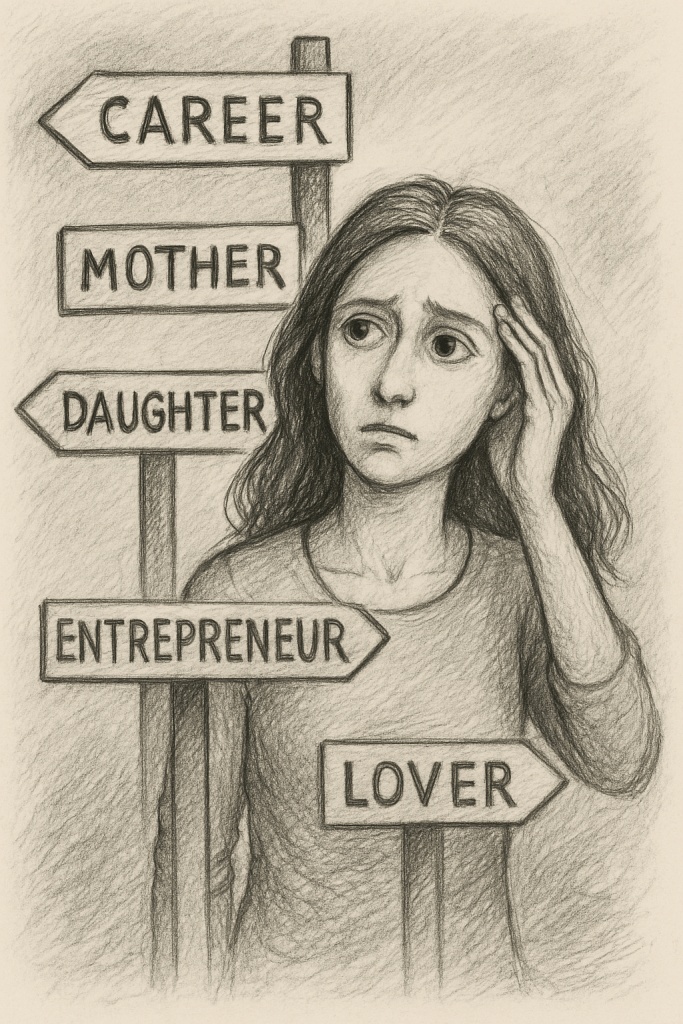
What is the impact of carrying more responsibilities than your partner on your sense of self? In other words, do you feel like a whole or complete person all the time? Or, is your imbalanced family dynamic impacting your ability to feel that way?
Rose: Sometimes, I feel lost to myself. Who I am outside of being a mother, spouse, and employee? I always feel like I’m forgetting something. And I’ve noticed that feeling has carried over into other areas of my life.
B+WorkingMom: There are days when I don’t even know what I want anymore. I’m so frustrated and overwhelmed by the house and my child’s needs and my personal and work obligations that if asked I couldn’t tell you what I wanted to eat, much less what would make me happy. On the rare occasions I find myself at home without my child on a day off I end up just sitting and doing nothing. Because while there are tons of things I’m sure would make me happy if I did them, my dull brain can’t come up with anything. I feel like every identity available to me is focused on another person’s needs, not myself at all.
TaraH: I feel fractured but I fight for my sense of self now that the boys are older. I am challenged by my partner for seeking these outlets so it’s hard but I’m desperately trying.
Emma: Often I feel like I’m running on autopilot. And so I’ll wind up scrolling or something during my down time because I’m so shot from all of the mental gymnastics that I don’t have the bandwidth to do the activities that I really enjoy.
KB: I miss a sense of accomplishment I got from teaching, and I really really miss the social aspect of going to work…outside of the house…with adults. Some days I feel like I’m missing something, so I’m trying to put myself out there in new ways. And my husband is supportive, as long as he has my attention when he’s home.
Jennifer: I do not take care of myself, sometimes going a week without properly showering because I am exhausted. . I am always tired, and use my days off to clean. I have no identity and I have no social life. I am just now trying to gain back friendships I have not maintained.
Lily: Imbalanced…. like I can’t do the things I l enjoy as a person, take care of my family, the house, work and get it all done. Something gets dropped…. and most of the time I am at the bottom of the list.
What is the impact of carrying more responsibilities than your partner on your experience as a mother?
Rose: I don’t get to be the “fun” parent. It makes me sad.
B+WorkingMom: I want my child to see a working mother, and to learn how to manage and clean a household, but I am afraid they will also see their father as not taking responsibilities in so many areas and think that it’s how the dynamic is supposed to be. I get frustrated more when I’m trying to do a household task (folding laundry, watering plants, dishes, etc) and my child is pulling or whining at me. Then I feel ashamed that I was frustrated with my child, who just wants to play, because I know my feeling stems from the undone task and even if I were to ask my husband to do it, it either wouldn’t be done any time soon or it wouldn’t be done properly and would definitely be met with an air of annoyance.
TaraH: I feel I am doing my best as a mom and I am deeply involved but it makes me an emotional and irritable mom sometimes. I wish I had more willpower to push them out of their comfort zones do they can experience life but I am so tired.
Emma: Often I feel like I’m not as good of a mom as I wish I could be. The inequality in responsibility means I question whether I should be working outside the home but I also know I’m a better mom when I get to do that so it’s just a challenging cycle at that point.
KB: It’s pretty much as I expected. It’s a lot, but I know Im trying hard for my kids and we have a strong bond.
Jennifer: I have less time with my child because I have to come home to cook or clean. Our child will be in another room playing by herself or wanting someone to join her outside (which my husband usually does). I become easily upset with my child, sometimes breaking down crying and my child has grown more attached to my partner because he is able to spend more time with her.
Lily: I don’t feel like I’m as good as a mom as I can be. I am working on it though. I think my kids know that I am always trying to do whats best for them, but sometimes I don’t always feel like I’m as involved because of the extra things I do.
Have you ever told your partner that you feel like you are carrying an imbalanced load of responsibilities? If so, how did they respond? If not, why not?
Rose: No – up until recently, it has felt fair. We both work full time and we both try to keep the house clean. He takes the kids to practice when I can’t because he works from home, so he’s more present, especially in the summer! But I definitely feel a mental strain.
B+WorkingMom: Yes. They do well with clear examples so I have shared memes, articles, and a cartoon that I particularly think nails it from Emma called ‘You should’ve asked’ Each time they got a little defensive, then had the ‘aha’ moment, felt chagrined, and said they’d do better. And then they forget. We’ve had frank conversations on how I can help them take some of the workload; a chore list (no, I don’t like feeling like I’m being told what to do), a clean the house day (no, it’s not that dirty), asking for help in the moment (yeah, but let me do it when I’M ready.)
TaraH: Yes. They are autistic so it’s not easy. I am ADHD so my emotional way of expressing these issues makes for hard understanding. We make small strides at time but it’s hard won.
Emma: Yes. Recently we had at least part of this conversation and my husband responded well for the most part and has been working to change the at home responsibility divisions at least which has been helpful. And I’ve had to really work hard at that point too to allow him to do the chores because my instinct initially is to just take it all back on myself again.
KB: Yes, it’s a conversation we’ve had many times in many ways. He is supportive. He tries to understand and support my need for me time, social time, time outside of the house. He provides a maid twice a month so I don’t have to do the really crappy chores. I often need to reset my mind to what I’m getting in our arrangement. Talking helps us see both sides.
Jennifer: Yes I have. He feels at fault and agrees he can do more but it only gets better for a week before he starts falling back into his depression/feelings of suicide.
Lily: Yes. I am working on my communication skills in how I approach this topic, but in the past they have just gotten defensive. They have felt as if I’m trying to call them lazy or unhelpful. So… i just don’t bring it up.
In a perfect world, describe how your family would operate in terms of shared responsibilities between you and your partner?
Rose: He would take initiative to clean the house and maintaining some appointments. That’s what I feel I need the most help with.
B+WorkingMom: No set rules about whose chores are whose, just an attitude of keeping the house moving and trying to give each other equal personal time AND couple time. I would prefer a chores to do chart or something like that, but instead of assigning it to a person like you would a child, just check it off when it’s done. Actually, once we hit a rhythm I don’t even want that, but I think it’s what it would take to get us in a good place.
TaraH: This is hard. I want to work and share the burdens of knowing what the boys need and how to get it. I’m not a natural housekeeper and I’d love support there. I think it might be too hard to even look at what would be fair because I’ll never have it.
Emma: Far more divided down the middle. And more of the mental load would be shared. Where I wouldn’t have to spell out all of the components of a task that I need done. He would just be able to do it. And preferably he’d know when appointments are and when playdates are happening and possibly have my husband able to schedule some of these things without my input.
KB: I don’t think I would change much in regards to my expectations of his responsibilities at home. I wish my children showed more responsibility in household chores.
Jennifer: Duties would be primarily taken care of him and food would be ready by the time I came home. That way we have more time to spend together as a family. He would feel like he is contributing and taking care of the household.
Lily: Everything would be done equally and without being asked 10 times. I wouldn’t have to ask him to clean the bathrooms. He would just notice and do them.
In a realistic world, what are the tasks and responsibilities that you would like to delegate to your partner to protect your mental health?
Rose: House work. I wish I wasn’t always thinking about how dirty things are in the house.
B+WorkingMom: Activities with our child outside the house without being repeatedly asked, proactively handling yard responsibilities, being involved with the family schedule by either offering to set up child appointments or putting their own appointments on the calendar, research into or actively fixing household damage that will worsen with time. Generally just being proactive and taking on half the mental and physical work load.
TaraH: Help with education and emotional needs of the kids. A working knowledge of what needs to be done in the house and helping me do those tasks while also teaching the boys. Marriage counseling to help us rebuild our marriage.
Emma: More of the home tasks: cooking in particular (since the cleaning has gotten a ton better), laundry. The mundane stuff that has to get done but don’t at this point unless I do them.
KB: I try to advocate for some me time. Some nights I’ll ask him to do bedtime routines so I can take a bath and be more present with him in the evenings. Getting out on a weekend for lunch with a friend or for a haircut is something I have to ask for, but he usually will help out if we get some quality time together around it.
Jennifer: Proper cleaning and maintain the house. To be able to do things on his own without being told.
Lily: Cleaning the bathrooms, taking turns vacuuming the house, help with laundry and his days off, and not being the only with that has the information.
If you could tell your partner one thing about your imbalanced family dynamic and have them really understand, what would it be?
Rose: I spend all day at work delegating, scheduling, and being present for others. I need a safe space sometimes to just exists without constantly thinking about what needs to be done.
B+WorkingMom: You are an adult. I shouldn’t have to ask you to do the basics to keep the house running. I shouldn’t have to ask you to fold laundry if it’s in a pile on the bed and I’m dealing with a screaming child. I shouldn’t have to ask you to move something you step over every day to its correct place. I get that it wasn’t what you grew up doing but I know you understand how to help out in a household.
TaraH: I don’t know.
Emma: That the mental load is the hardest component not to have split down the middle. That I appreciate the assistance with the physical tasks and that all really helps. But the task of thinking through the chores, scheduling both chores and childcare stuff and then doing all of the actual tasks is the hardest part and the part I need the most help with.
KB: I need a social life.
Jennifer: That this is hurting me as a person. I have no identity, I cannot make time to exercise, I skip doctor’s appointments to save money and give me time back.
Lily: That I am drowning and I would be a much happier and spontaneous person if I didn’t have everything running through my head all day.
If you could tell another mother who is experiencing an imbalanced family dynamic/carrying the whole mental load, what would it be?
Rose: Make a list of tasks and set it fairly. If it’s a joint task, talk about how it will be split. Don’t hold it all in because that can foster resentment.
B+WorkingMom: The best way to have a hard conversation is while you are walking, when you aren’t frantic or angry. Try to schedule a daily walk, encouraging your partner to come with, that way it’s not an immediate red flag when you ask to walk and talk.
TaraH: Keep on going for your kids and yourself. Get therapy if you can afford it. Take help. Any help. Don’t feel guilty when you get help.
Emma: Don’t step in to do the things you’ve asked to have done without your assistance. When you ask your partner to do x, don’t step in and do it for them after the fact. Remind but don’t do.
KB: In reality, I think part of it is just the nature of the beast, but if you can create a safe space to communicate what you are feeling and what you need, I think most partners want to give it, want to make you happy. Also, its OK to say no to all of the extras (PTO, multiple activities for kids, over-scheduled weekends, etc) so that you can have enough time and energy to just be present with your family.
Jennifer: I honestly would say if this is something you can live with, stick to continuing counseling. Put your foot down and say, today you are doing something for yourself.
Lily: You got this. It may take time but don’t give up on your partner and let the animosity build. I have seen how it affected my parents relationship. Learn how to be okay with taking time for yourself creating boundaries. Therapy has been amazing and I am learning it is okay to communicate my needs.
Citation:
 I'm Not The Same
Leave a comment